
Safety Inspections Continue as Factories Work Toward Reopening
October 22, 2026 | China Fireworks Industry News
China’s fireworks manufacturing industry continues to face a difficult recovery as Liuyang officials emphasize stricter safety enforcement, factory improvements, and a controlled return to production.
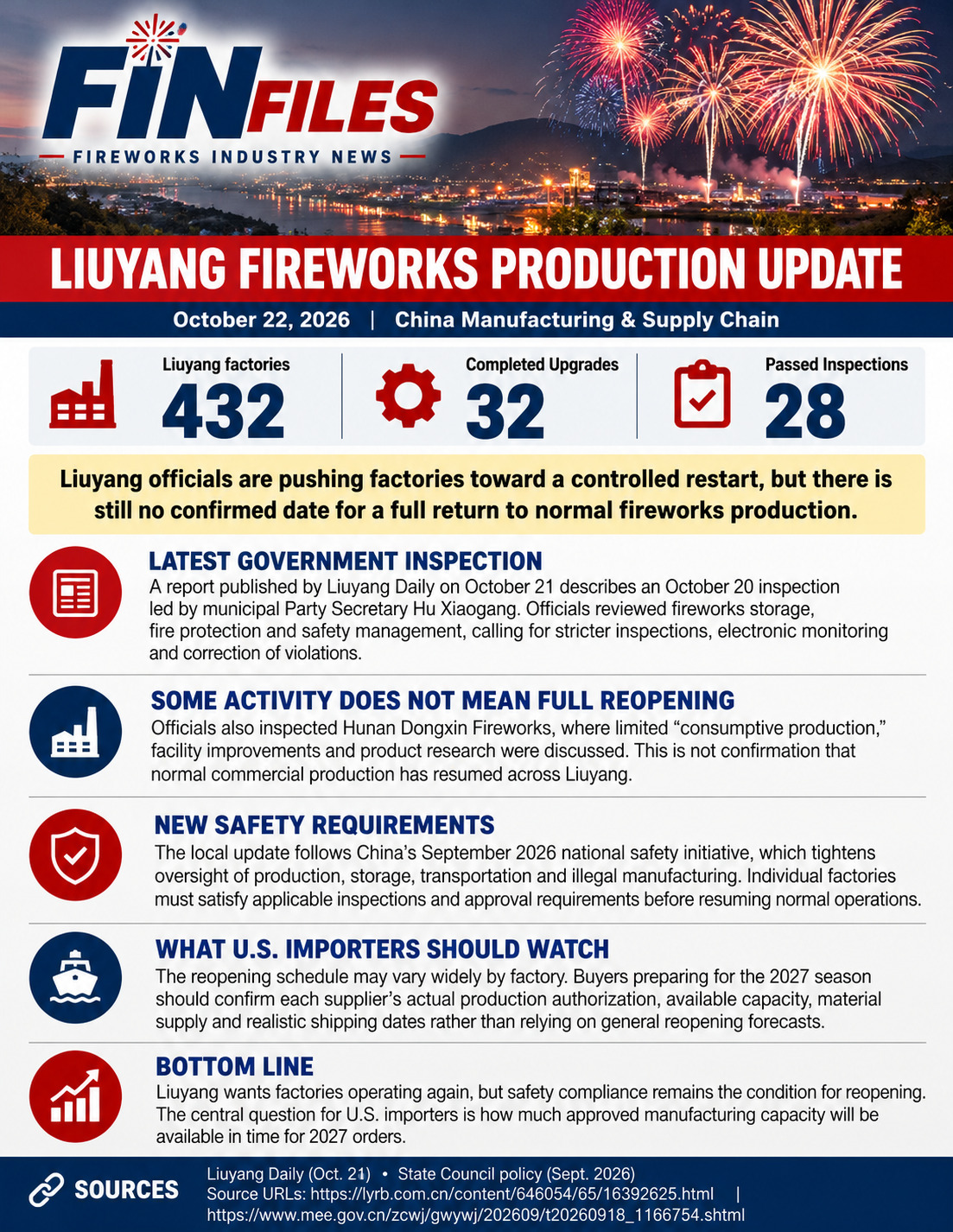
On October 20, Liuyang Municipal Party Secretary Hu Xiaogang personally inspected fireworks storage facilities and production activities, reinforcing the government’s commitment to tighter safety controls throughout the fireworks supply chain.
The inspection, reported by the Liuyang Daily on October 21, comes as fireworks manufacturers continue working to satisfy new requirements following the May 2026 factory explosion and subsequent production shutdowns.
Government Focuses on Safety Before Full Production Recovery
During the inspection, Hu Xiaogang visited two fireworks storage operations, reviewing product storage practices, fire protection equipment, and safety management procedures.
Officials emphasized preventing excessive storage quantities, improperly mixed inventory, and other violations that could create additional hazards.
The government also directed regulators to strengthen inspections, improve electronic risk monitoring, and require companies to correct identified safety deficiencies.
The message is that production recovery must proceed alongside stricter government oversight.
Factory Production Activity Underway, but Restrictions Remain
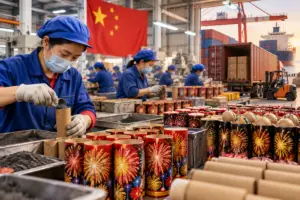
One particularly important detail involves Hunan Dongxin Fireworks Co., Ltd., where officials reviewed ongoing consumptive production activities, factory upgrades, and research into environmentally improved fireworks.
The report confirms that some production-related activity is taking place.
However, consumptive production should not be confused with unrestricted commercial manufacturing. The announcement does not establish that Dongxin or the broader Liuyang fireworks industry has received authorization to resume normal production at full capacity.
Local officials were instructed to help manufacturers address compliance issues and accelerate their progress toward approved reopening.
New National Regulations Add Further Pressure
The latest Liuyang announcement follows new national fireworks safety requirements issued by China’s State Council in September.
Those requirements call for tighter controls over factory licensing, production methods, hazardous materials, storage, transportation, and illegal manufacturing.
They also emphasize greater automation, improved safety management, and the elimination of certain high-risk manufacturing processes and products.
These changes could have long-term implications for how fireworks are manufactured in China, particularly for factories facing substantial renovation costs or difficulty satisfying the new standards.
What This Means for American Fireworks Importers
For U.S. fireworks importers preparing for the 2027 selling season, the latest announcement offers evidence that government officials remain actively involved in helping factories resume operations.
However, it also reinforces several ongoing concerns.
Factories may face different reopening schedules depending on their ability to complete upgrades and obtain necessary approvals. Production capacity may recover unevenly, and suppliers could encounter difficulties meeting existing orders.
Importers should confirm whether their suppliers have received formal authorization for commercial production rather than relying solely on estimated reopening dates.
The announcement provides no confirmed date for a full return to normal manufacturing capacity.
The Bottom Line
Liuyang’s latest statement makes one thing clear: the government wants the fireworks industry operating again, but safety compliance remains the condition for restarting production.
With the 2027 U.S. fireworks season approaching, the industry’s recovery will depend on how quickly manufacturers can complete required improvements, pass inspections, and return to approved commercial production.
The critical question for American importers is no longer simply when China will reopen. It is how much actual manufacturing capacity will be available when their orders need to be produced.
Sources: